NEAR Protocol Tests Multi-Month Lows as Network Upgrades Trigger Exchange Suspensions
Market Structure Shifts Lower
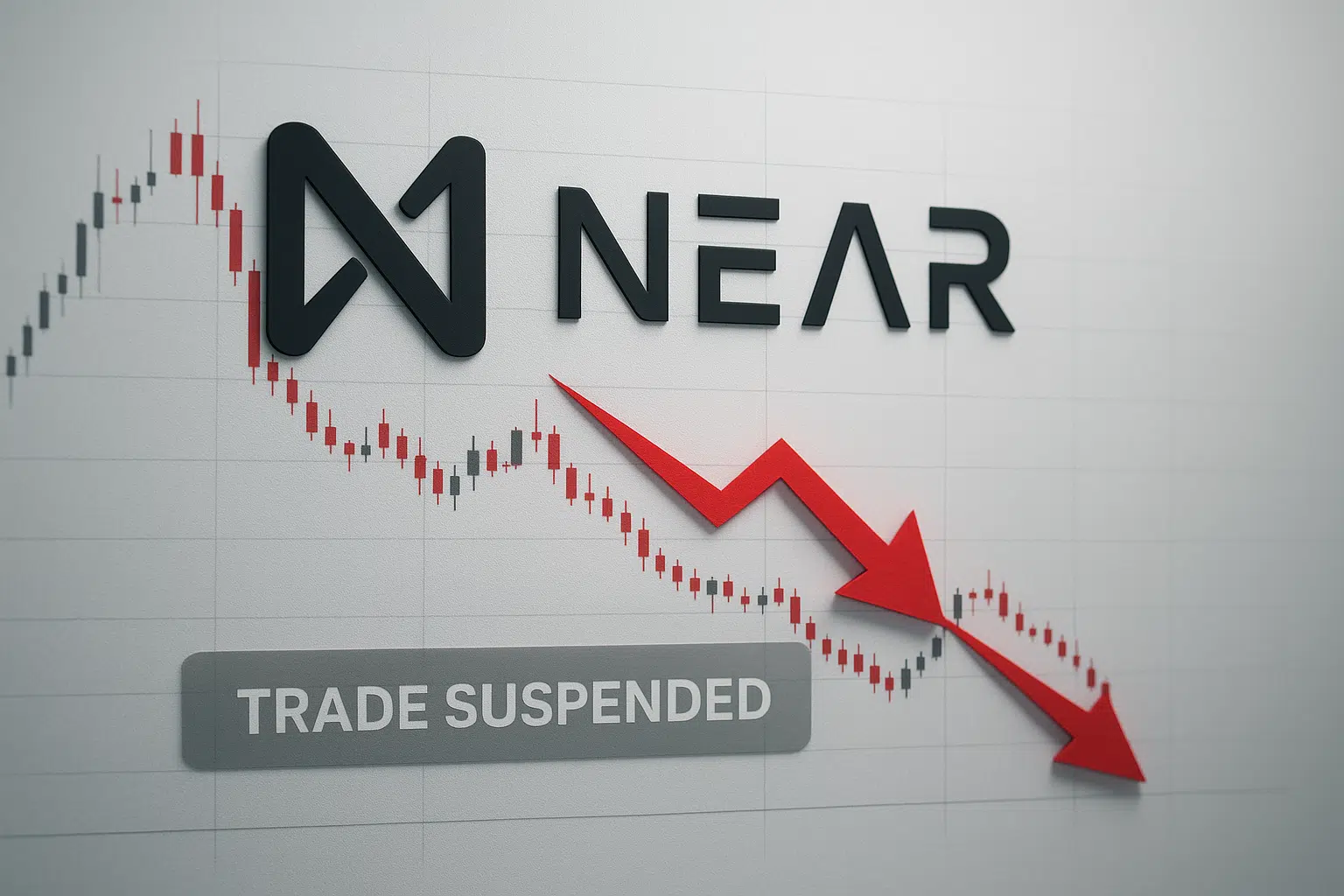
- NEAR suffered a weekly loss of 13% and traded at multi-month lows following upgrades that required trading pauses on major exchanges.
- The clash of short-term liquidity concerns and network upgrades led to the lowest weekly close since late May.
- Technical indicators show that the market dipped well into deeply oversold conditions, the most since the broad washout two months ago.
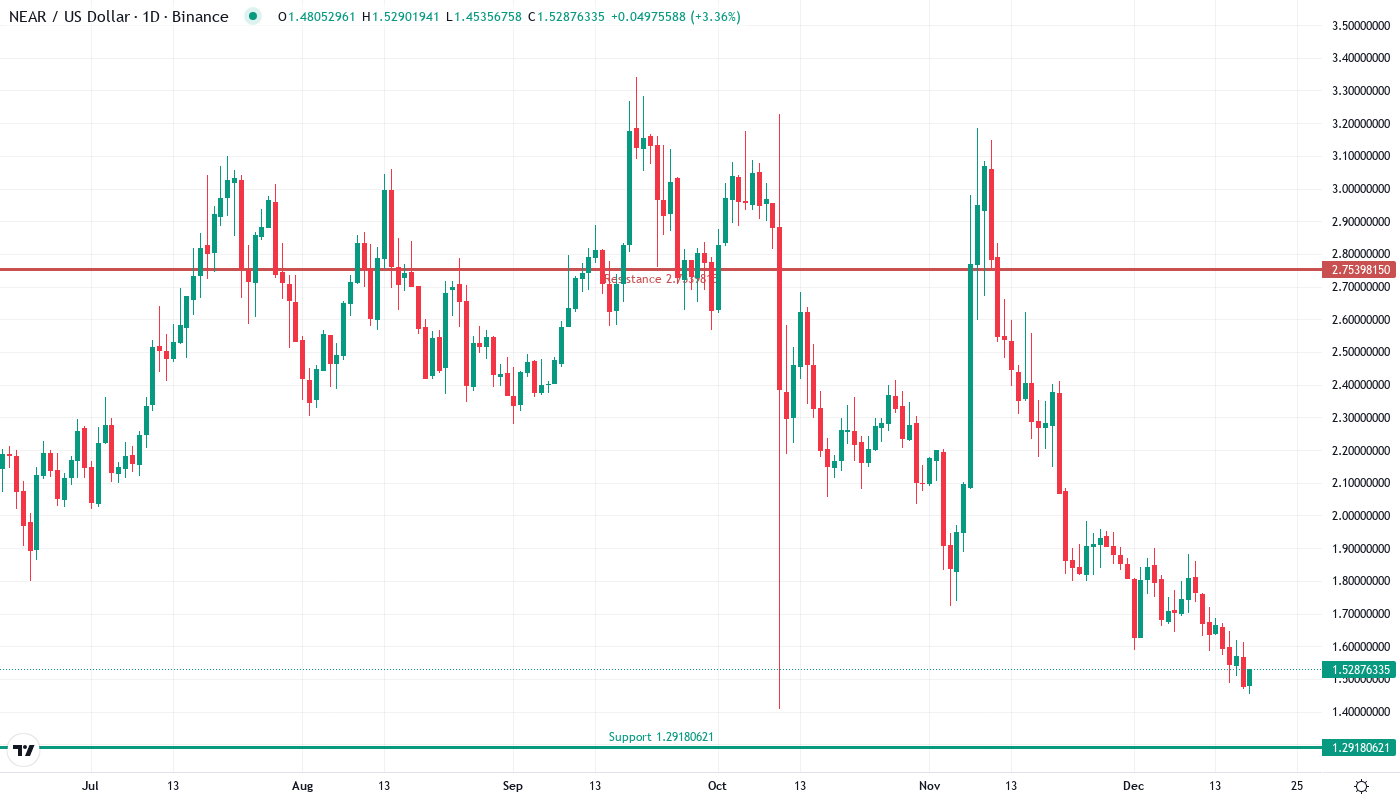
NEAR Protocol crashed to $1.53, down 13% on the week, and deep multi-month lows as the announcement of network upgrades coincided with Upbit and Bithumb exchange suspensions. The relentless decline extends the monthly loss to 33% and the token is now 52% lower than six months ago, with the halts in trading reinforcing the sales pressure near key support levels. Traders must now ask whether the oversold momentum can trigger a rebound, or whether exchange interruptions could push the market down further.
| Metric | Value |
|---|---|
| Asset | NEAR PROTOCOL (NEAR) |
| Current Price | $1.53 |
| Weekly Performance | -13.06% |
| Monthly Performance | -32.65% |
| RSI (Relative Strength Index) | 35.9 |
| ADX (Average Directional Index) | 30.7 |
| MACD (MACD Level) | -0.13 |
| CCI (Commodity Channel Index, 20-period) | -151.35 |
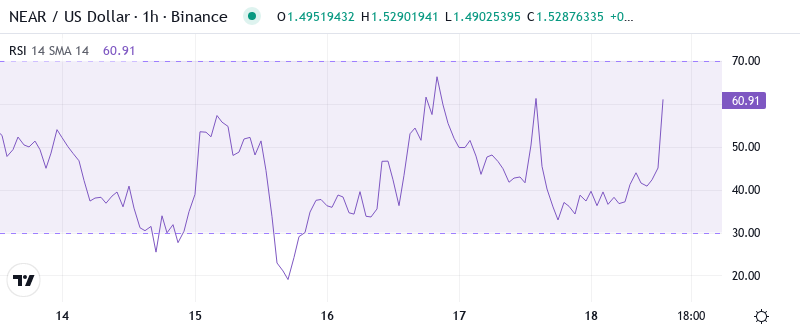
RSI Plunges to 35.95 – Deepest Oversold Territory Since August Collapse
With that wall of worry now thoroughly under construction, the project is presumably one of the most shorted in the market: into the full swings of a liquidation spiral, institutional exodus, and founder dumping as the bad news feed swells. Perhaps that’s why the plan to resume trading, which still requires shareholders’ approval (lately given a tepid response), is on track for next week with no new update forthcoming on the SEC inquiry.
Therefore, for swing traders, the extreme momentum reset in the wake of a token listing should be enough to take a calculated gamble here with a tight stop just below current levels. A swing target of around 150-160 sats is a reasonable expectation, and a bounce from here to 150 sats offers nearly a 15% gain. Of course, losing Upbit and Bithumb as potential exit points on rallies complicates the situation somewhat, but in most cases swings out of the RSI sub-40 territory have been good for at least 15-20%.
ADX at 30.66 Confirms Mature Downtrend Approaching Exhaustion
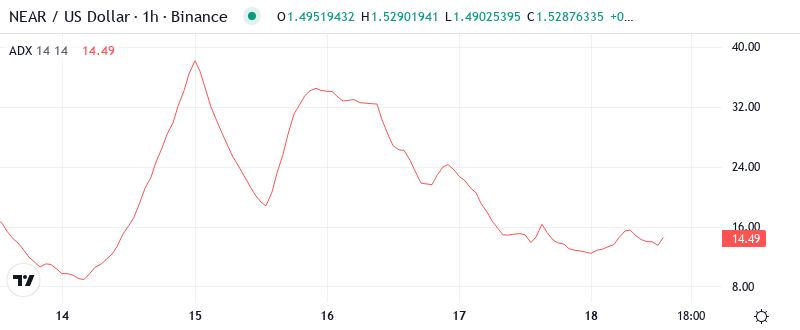
Trend strength data show that investors were quite convinced about the decline, as the Average Directional Index (which measures the level of conviction behind a move) rose to 30.66. This isn’t yet at highly extreme levels where panic lows (or highs) develop. Those tend to come above 40. However, it does show that the sellers largely kept control of the market and the trend, as I said, was well-established.
Based on past performance, during downtrends ADX readings above 30 tend to last 5-10 days before reaching exhaustion. In other words, the present setup is more favorable for range trading in the shorter run as the old trend is long in the tooth. The completion of the network update and the resumption of trading could potentially be the triggers for ADX to turn lower as trending gives way to consolidation which should be a more welcome development for mean reverting.
Price Trapped Below Entire EMA Stack – $1.70 Now Key Resistance
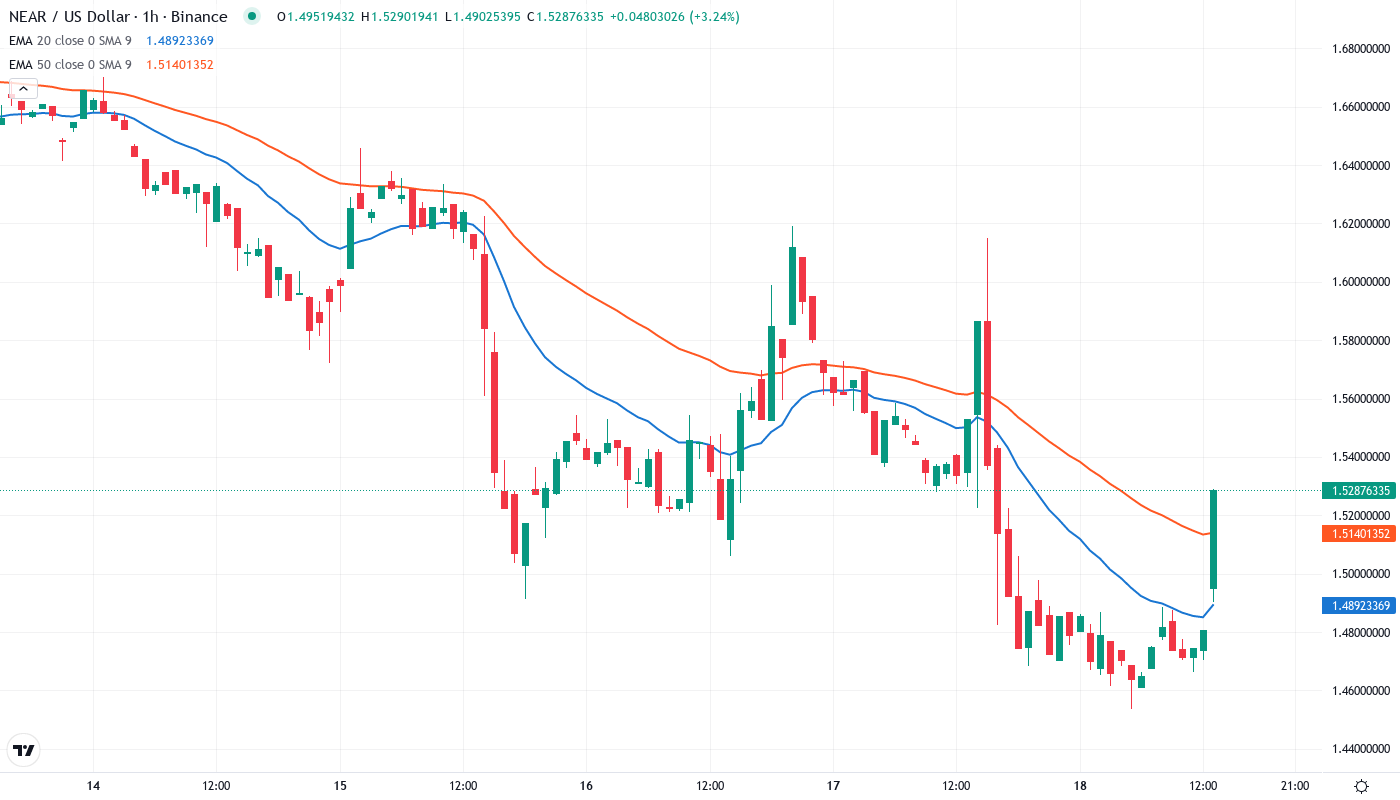
The moving average analysis is bearish as NEAR resides under all the important EMAs including the 10-day ($1.60) to the 200-day ($2.45). The 20-day EMA ($1.70) is the most critical however, given that it flipped from support to resistance after any effort to regain it failed three times this week. It mostly turned down advances while investors absorbed the shock of trading halts this week and will likely mark the initial obstacle of rebounding levels.
One notable aspect of the present configuration is the sizable separation between cost and the 100-day EMA, which comes in at 27% higher at $2.17. The 200-day EMA is 60% above the current reading. These kinds of disconnects are generally uncommon and lead to a quick expansive recuperation rally, or an all the more balanced, longer-term combination stage. The compaction between the 10-day EMA and the 20-day EMA demonstrates that selling interest has limited to some degree. The bullish development will recapture $1.70.
Support Architecture Crumbles Below $1.29 While Resistance Stacks to $2.24
There are several resistance levels that the price must break in order to reach the all-time high at $3.80. The 20-day Exponential Moving Average (EMA) is at $1.70. The key psychological level of $2.00 will also act as resistance. The 50-day EMA is at $1.79. The monthly pivot is at $1.91. The 100-day EMA is at $2.17.
However, on the negative side, support appears to be fragile, with only the $1.29 monthly S3 level available and the current pricing level standing between it and unprecedented levels. Since June, the price has rebounded three times off of this mark, but the loss of this level of support would create a gap in the air reaching the approximately $1.00 level, psychic resistance. Of course, there is no historical price action to guide investors at this point.
The market structure itself we see an expanse of longs established between $2 and $2.50 on the way up that will likely defend the lower end of that range with increased tenacity on a retest, possibly having to absorb some of the long liquidation from those that bought the breakout as their stops under $2 are likely to be next to hit.
Bulls Need Reclaim Above $1.70 to Avoid Deeper Flush Below $1.29
Buyers need to overcome the 20-day EMA at $1.70 to change the current downtrend and aim for the $2.00 focal resistance point. Several positive developments recently and the Nucleus Vision token release could be the trigger for that. If we see more of the current buying interest, possible short covering could push the price back to the 50-day EMA at $1.79.
If NEAR fails to hold the $1.29 monthly S3 support on any retest, the bearish scenario will be activated. This would indicate a continuation of the multi-month downtrend and would likely result in positions being flushed out as the price approaches the psychological $1.00 level. However, RSI is already in oversold territory and ADX indicates trend maturity, so for this scenario to play out there would need to be new negative drivers or the overall market would need to weaken.
Due to the extreme oversold nature, exchange hiccups and NPRO occurring soon, it is likely NEAR can carve out a base in the $1.29-$1.70 region for a few days and try a dead cat bounce. Technical exhaustion coupled with newsflow implies that longs should look to add exposure in the range as offering the optimal risk-reward for position trading in the face of elevated gyrations.