CRO Tests Critical Support at $0.097 as ETF Launch Speculation Meets Technical Resistance
Market Structure Shifts Lower
- CRO has declined nearly 14% in September, testing last year’s five-month trough.
- Institutional-grade products from 21Shares failed to spark sustained buying, volume remains low.
- Key technical levels: support at $0.097 (tested seven times since June) and resistance at $0.117.
Cronos has lost almost 14% in September, closing lower for three consecutive weeks as investors reassessed the overvalued situation after news of two new institutional-grade products from 21Shares in mid-September. This significant drop in the price is proportionate to the overall downtrend that established at the all-time high reached in February and is looking to retest last year’s five-month trough.
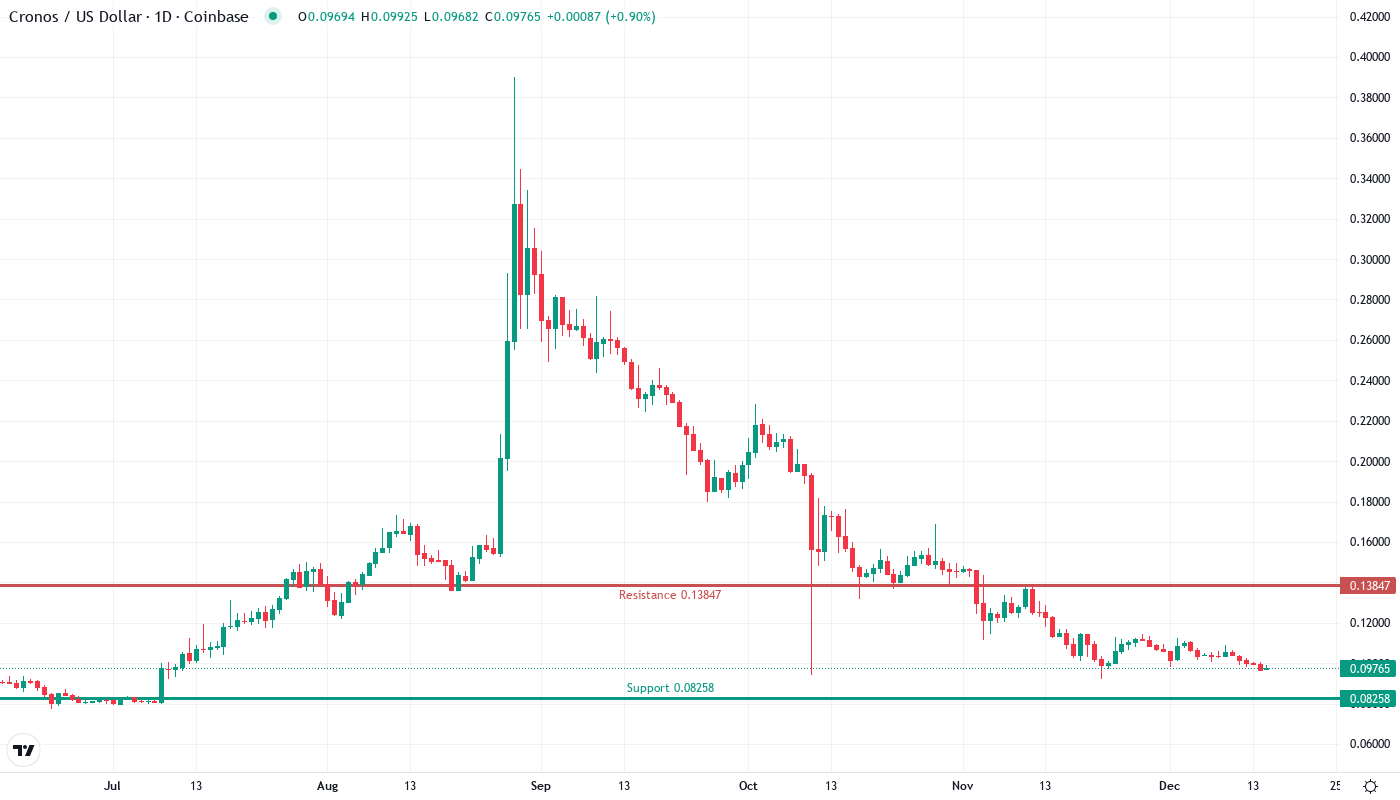
Cronos (CRO) has dropped 14% over the past month to $0.097, wiping out the November relief rally’s gains, while Crypto.com and 21Shares have capitalized on recent momentum in the benchmark cryptocurrency to launch new institutional-focused investment products. The token’s price performance leaves a less rosy picture — the icing hinting at bullish developments with the ETF and Cronos One gateway announcement was met with a solid dose of overhead ice encountering heavy selling pressure around the $0.117 resistance region. The $0.097 support level will see its seventh test since June.
| Metric | Value |
|---|---|
| Asset | CRONOS (CRO) |
| Current Price | $0.10 |
| Weekly Performance | -5.80% |
| Monthly Performance | -14.01% |
| RSI (Relative Strength Index) | 35.2 |
| ADX (Average Directional Index) | 31.6 |
| MACD (MACD Level) | 0.00 |
| CCI (Commodity Channel Index, 20-period) | -136.20 |
RSI Signals Oversold Bounce May Be Due – But Lacks Conviction
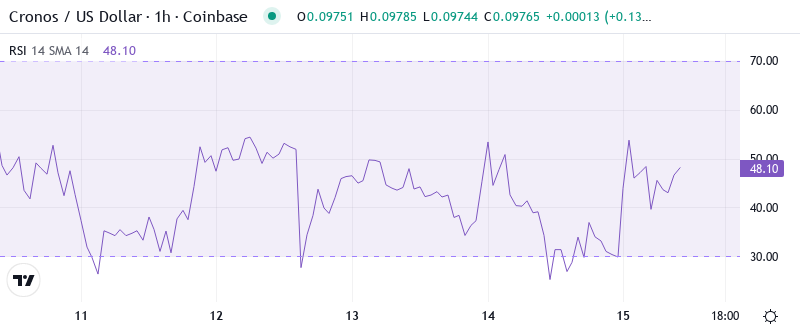
With the oscillator at 35.22 on the daily, the market is approaching capitulation for the first time since August’s washout to $0.082. That previous oversold extreme saw the local bottom in ahead of a 42% relief pop to $0.117. The material difference between then and now is volume. While that oversold bounce in August came on a pickup in activity, current readings reflect extremely low volume despite the 21Shares product going live this week which should in theory lead to a flow of institutional capital.
What is interesting to note about RSI is that during the decline from the peak of $0.117 in December, it did not crash rapidly as an index experiencing panic sales would. Instead, it continued to fall steadily, indicating that there was not a wave of abandonment, but a wave of the spread. For swing traders this is a reading on the excess sale that may interest you, but requires appropriate risk avoidance – the bullish news flow has not convinced the volume of the salesmen to read the message.
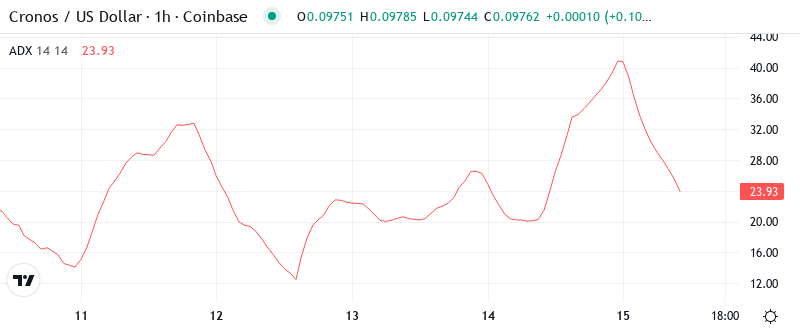
ADX at 31.5 Confirms Downtrend Has Legs Despite Support Tests
The Trade Destrier says the S&P did something on Friday that it hadn’t done since May 2018. It closed 9 days in a row under its 6-month MAs. The “reality” phase generally begins when bounces get rejected somewhere between the 8 and 21-DMAs, 90% of the NYSE above their 200-DMA. That’s not to say “the low” is in, but it’s at least close term oversold.
When ADX moves higher from a relatively low level (as it did in mid-January just below 20), it often gives false signals as to when new trends first kick off. It takes some time for prices to confirm a trend change, and the new trend had likely gotten underway a few days before the first three candles of our bottoming window formed. This bullish price action similar to what happened right before Thanksgiving played out quickly in just three days with the same magnitude as the late-November rally suggesting this is part of a new trending environment and we wont see many higher highs or lower lows get put in unsustainable countertrend spikes.
20-Day EMA at $0.104 Now Caps Rally Attempts After December Rejection
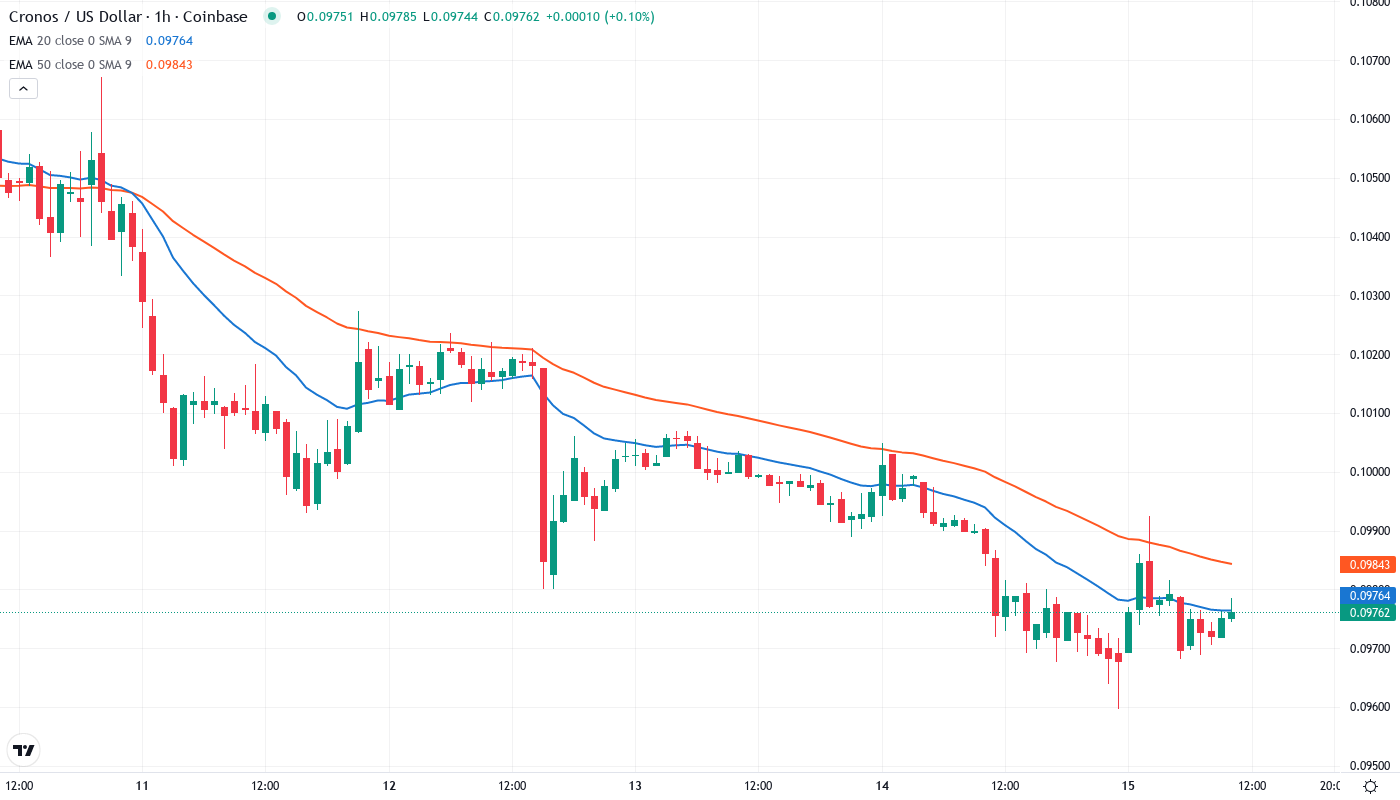
The EMA 50/100 bear cross projects major long-term resistance increasing every day. Tomorrow it will be ~$0.115, and by year-end approximately $0.129. Per the prior update, momentum and volume create a pool of liquidity risk between current and major historical support.
What stands out the most is how the 20-day EMA has turned from support to resistance. This level propped up price from November 7 to December 15, where it met every minor decline. Since the rejection from $0.117 in mid-December, this moving average has stopped all three rally efforts, and each one has failed with a lower peak. The prior support at $0.104 now turns into a level that bulls must recover with force, pushing price upwards and out of the resistance level – otherwise, lower prices should be expected, and the next main support is the 200-day EMA at $0.149.
Support at $0.097 Holds by a Thread as Resistance Stacks Heavy Above
There are immediate resistance clusters between $0.104 and $0.108, where the 20-day EMA converges with the psychological round number and the daily pivot. The failed breakout in December also created additional supply at $0.117, which now aligns with the monthly R1 pivot – a double barrier that rejected price action decisively, even with the fundamental catalyst of the 21Shares ETF speculation.
Buyers need to rally strongly above the seven-week trendline in the $0.108 area and then target the $0.112 zone where three-straight weekly highs show strong cluster resistance. Past that, the declining 200-day Moving Average is confronting the 50-week MA, with a cross in the week after Christmas.
The current market structure indicates that the uncomfortable reality is that despite institutional inroads and ecosystem expansions via Cronos One, every rally over $0.104 is met with sellers. The tightening range between $0.097 and $0.104 is akin to a coiled spring, but with ADX increasing and volume decreasing, the breakout dynamics tilt towards the bears in the absence of new news.
Bears Target $0.082 Unless Bulls Reclaim $0.104 With Conviction
Buyers need to step up to overcome the 20-day EMA and invalidate prospect short-term risks. Moreover, reclaiming and maintaining the $0.108 level could potentially switch the daily outlook in buyers’ favor and let the market look straight to the resistance at $0.117 on December. Meanwhile, with these fundamental developments in place, the digital asset would benefit from the absence of any significant competitors.
The setup becomes invalid if the coin can close above its current daily resistance of $0.151. Such an event could lead to a squeeze up to the September high of $0.163. It’s best to wait for a daily close above the $0.163 pivot if this set up occurs as there are likely a lot of players stuck long. Smoothing this chop out will also give a much cleaner win ratio.
Based on the current chart setup, we would estimate there is a 75% chance we revisit $0.092-$0.095 in the next week or two. If that level holds, the next upper-level test, depending on which timeframe (weekly or daily) we pierce $0.104, will determine CRO’s direction going into November. We would lean towards a downside break coinciding with conditions worsening on the global COVID-19 front, but either way, caution is advised because there is likely to be volatility.